
Tests carried out at the clinic
In ear, nose and throat practice the decision is rarely made by looking alone: hearing has to be measured, middle-ear pressure seen, or breathing during sleep recorded. The tests below are carried out at the clinic in Ümitköy; which of them is needed follows from the examination.
Examination and testing in the same visit
Having the tests on site makes a practical difference: a hearing test can follow the endoscopic examination in the same visit, and the result can be interpreted with the surgeon in the same sitting. There is no separate trip to another centre and no weeks-long wait to have a result explained.
Which test is requested depends on the complaint. A test not being done is not a gap; it means it was not needed for that complaint.
The tests are carried out by the clinic's authorised staff; the measurements are then assessed with the surgeon, together with the examination findings and the history.
Hearing test (audiometry)
In a sound-treated booth, the quietest audible levels are measured at different frequencies through headphones. The result is plotted as a graph (an audiogram) and shows at which frequencies hearing is affected, by how much, and of which type.
That type distinction drives treatment: a problem in conduction through the eardrum and middle ear is approached in one way, a problem in the inner ear or nerve pathway in quite another. Speech discrimination can be assessed in the same session.
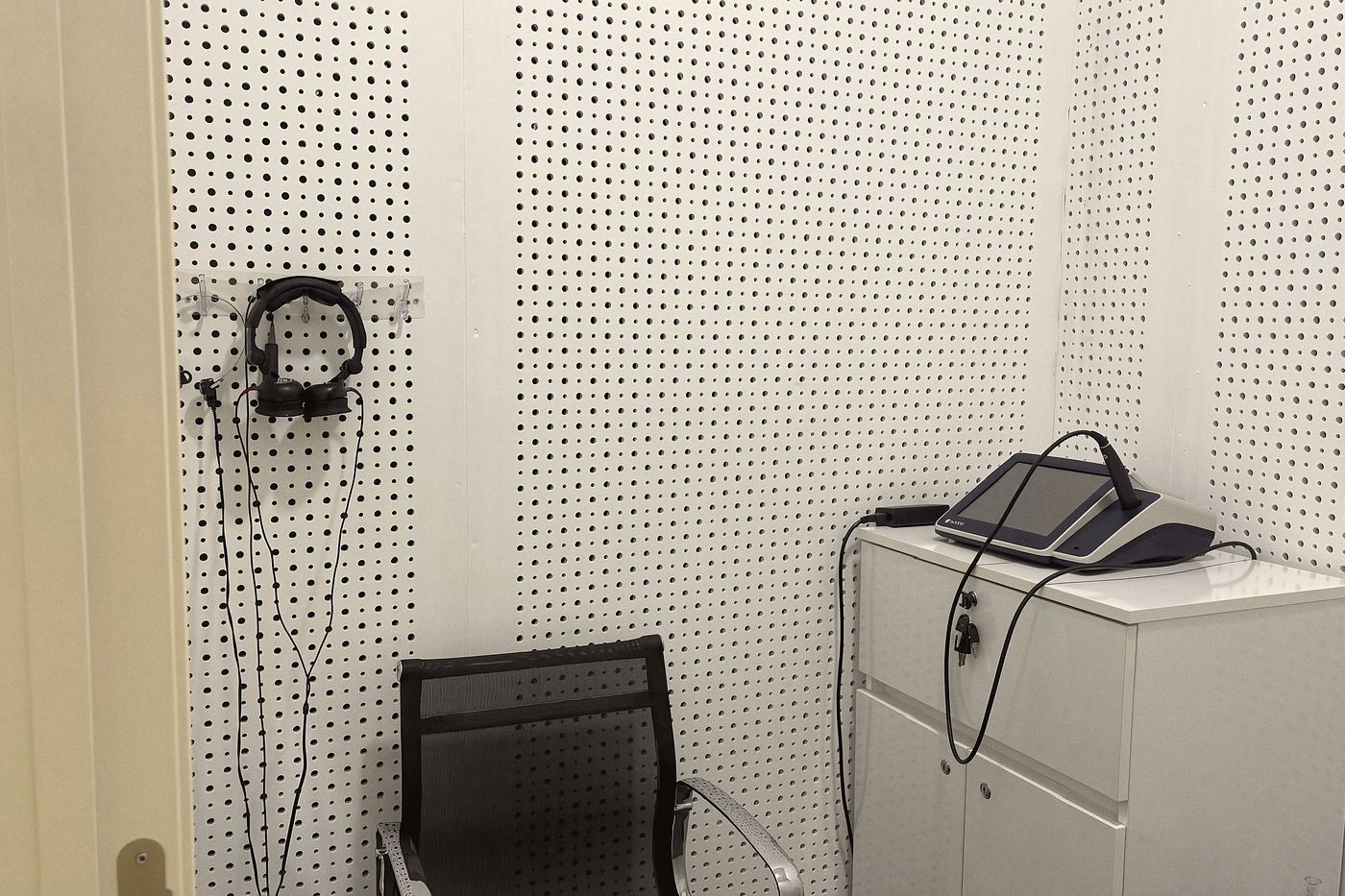
Middle-ear pressure test (tympanometry)
A small probe in the ear canal varies the pressure and measures how the eardrum moves. The test takes seconds, is painless and can be done in children.
What it shows matters: whether there is fluid in the middle ear, how tense the eardrum is, and whether the Eustachian tube is working. In children the commonest cause of hearing loss is fluid collecting in the middle ear, and that fluid is not always visible from the outside.
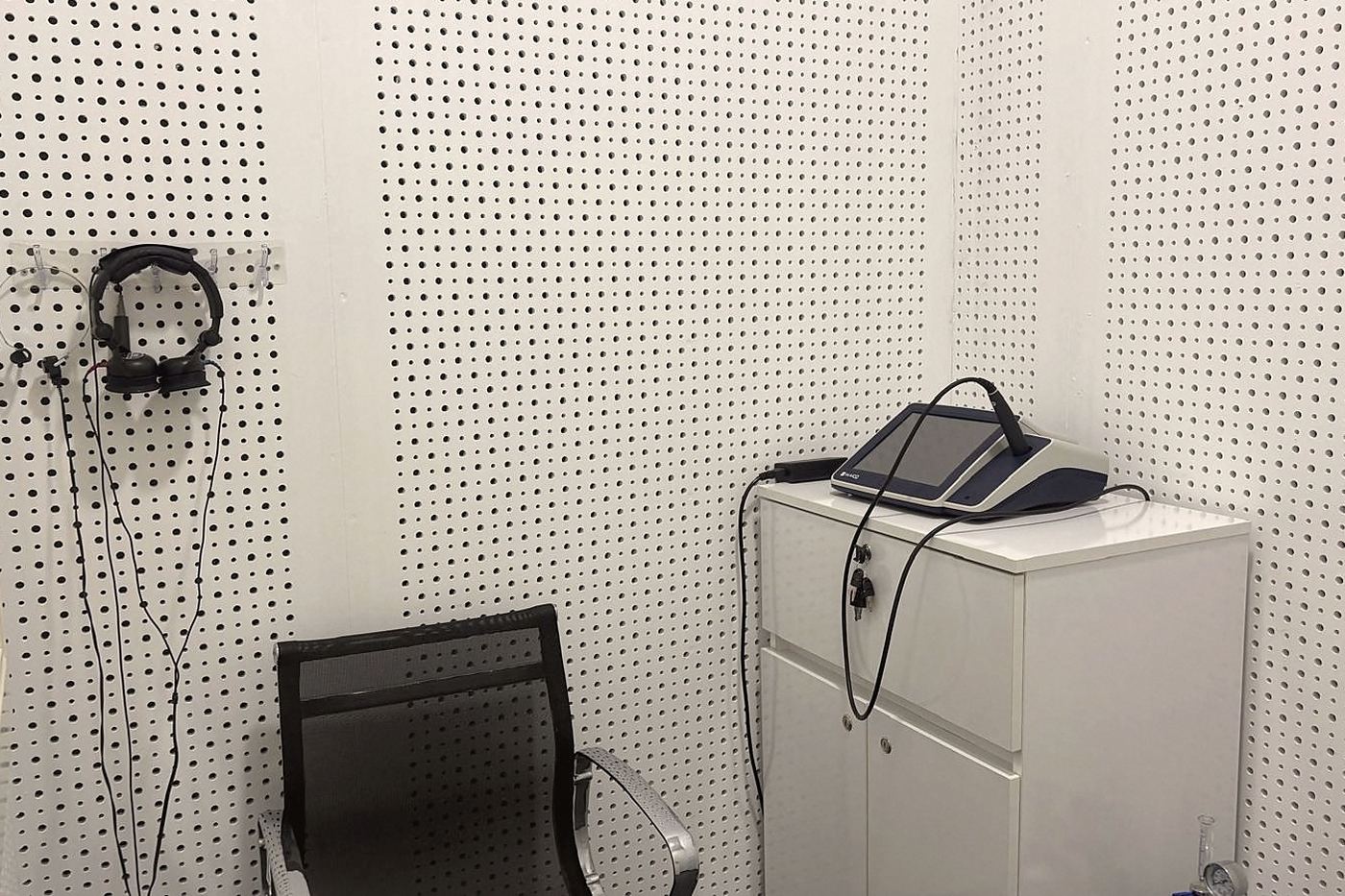
Hearing in children: screening, detailed testing and ABR
Assessing hearing in a child follows a different order from an adult. The first step is screening: measuring the response produced by the inner ear (otoacoustic emissions) is quick and can be done even in an awake baby. Screening tells you "pass" or "needs reassessment"; on its own it does not measure the level of hearing.
If screening or the complaint calls for it, detailed assessment follows. The method depends on age: in a young child, responses to sound direction and play-based testing are used; in an older child, audiometry as in adults becomes possible.
ABR (auditory brainstem response) records the electrical response of the pathway from the ear to the brainstem. The child does not have to respond, which is why it is valuable in babies, in children who cannot cooperate, and where screening and behavioural results disagree.
- When speech or language development appears delayed
- When newborn screening returned "needs reassessment"
- With a history of recurrent middle-ear infection or fluid
- Where there is childhood hearing loss in the family
- When the child does not respond when called from behind, or turns the television up
Which of these is needed depends on the child's age, history and examination findings; they are not all done together.
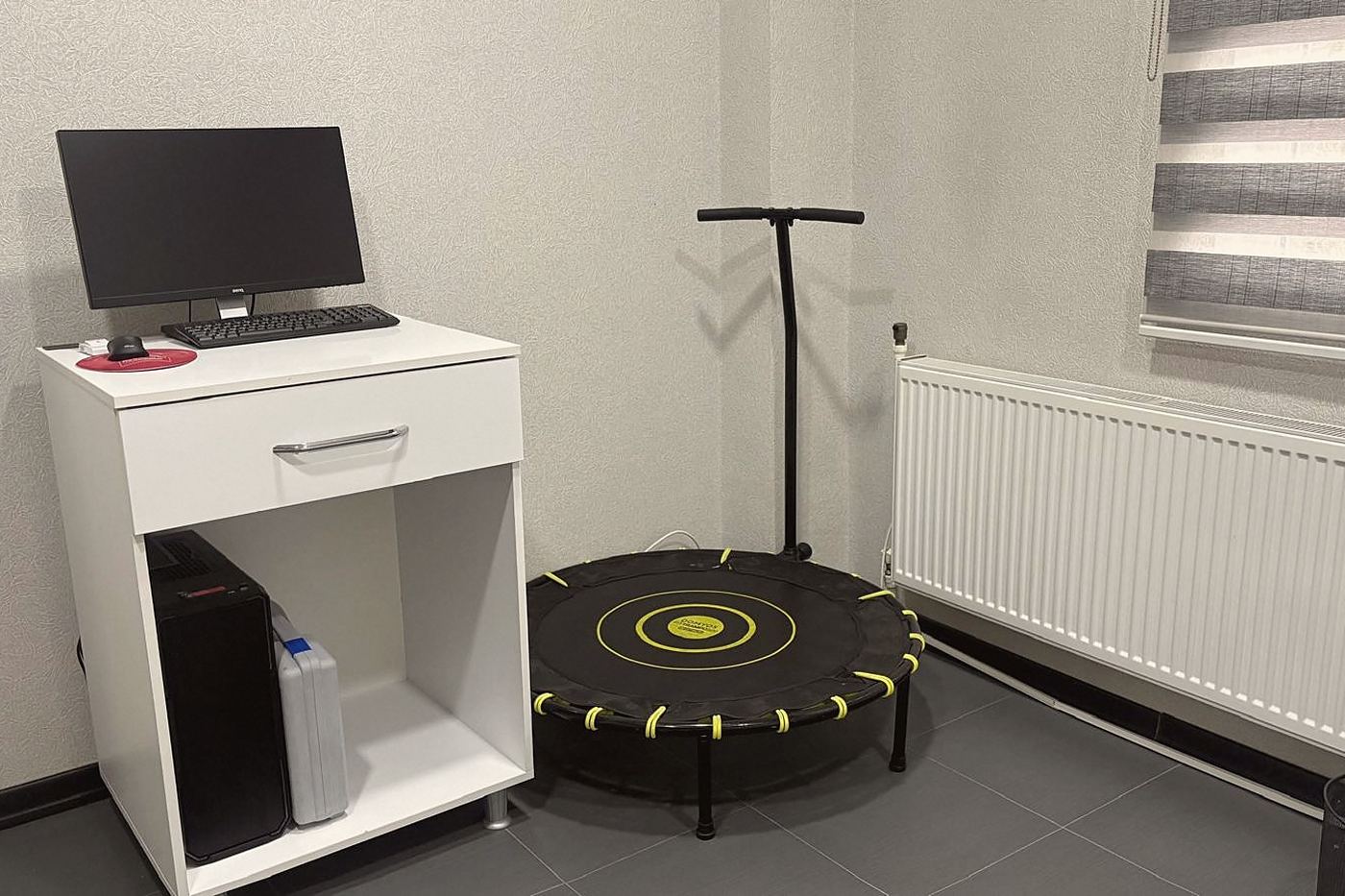
Balance assessment
In dizziness the first task is to separate inner-ear causes from the rest. Assessment begins with the history — whether attacks last seconds or minutes, whether head movement triggers them, whether hearing is involved — and continues with examination manoeuvres.
In BPPV, the commonest inner-ear cause, both diagnosis and treatment are manoeuvres; medication is not the main treatment. Assessment and balance rehabilitation work in the balance room form part of this process for patients with recurrent unsteadiness or fear of falling.
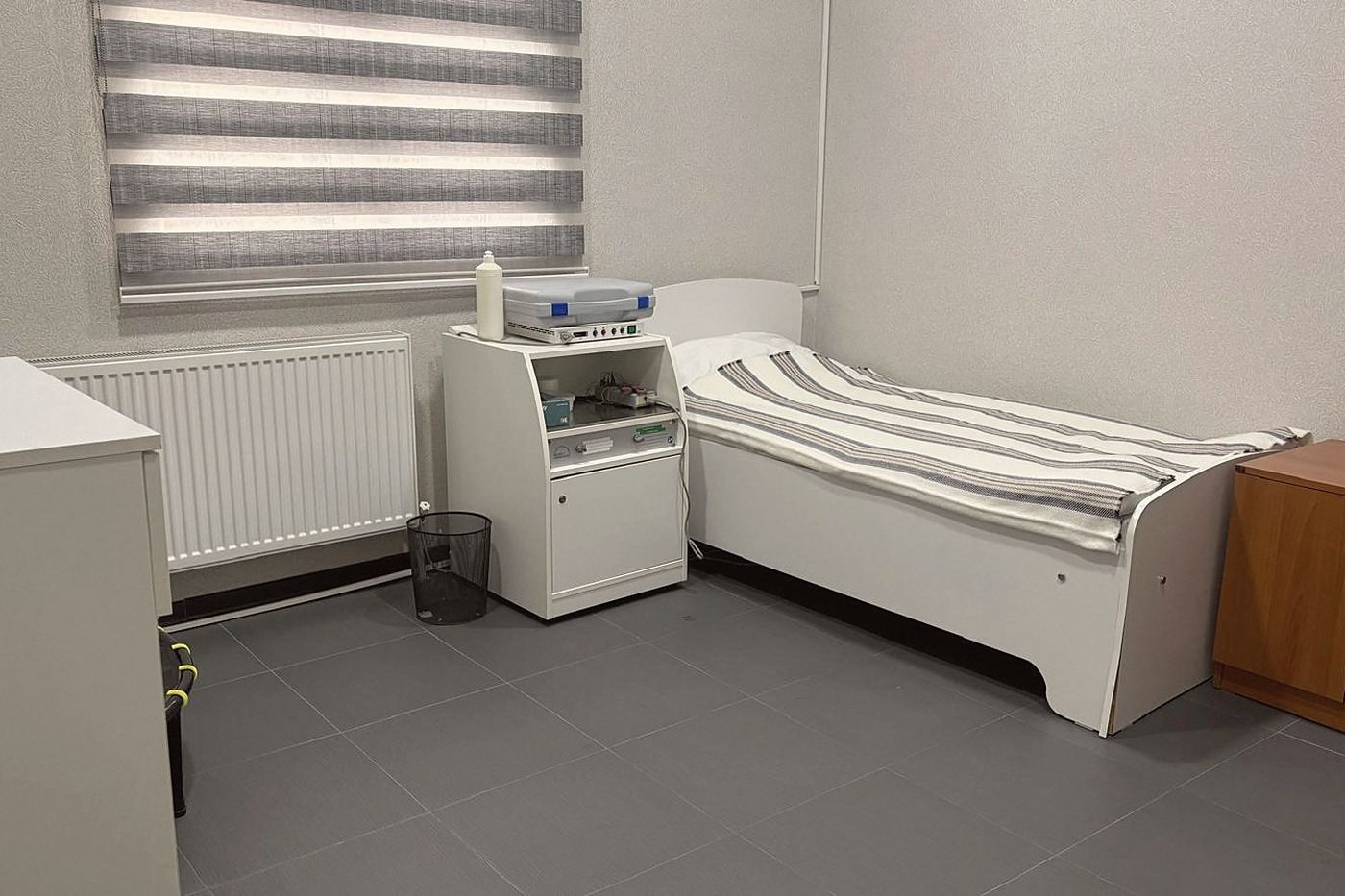
Sleep study (polysomnography) and setting device pressure
Where snoring and pauses in breathing are suspected, the decision rests on an overnight recording. During polysomnography, breathing, chest and abdominal movement, blood oxygen, heart rhythm, sleep stages and leg movements are recorded together. The next day the recording is analysed hour by hour: how often and for how long breathing paused, how far oxygen fell, and in which sleep stage and body position these clustered.
Treatment follows that measurement. In moderate and severe sleep apnoea the standard treatment is a positive airway pressure device used at night; surgery does not replace it, but relieving nasal obstruction can markedly improve tolerance of it.
If a device is to be used, its pressure has to be set for the individual. On a titration night the patient sleeps with the device while pressure is changed step by step, and the lowest effective pressure that prevents pauses, snoring and oxygen dips — particularly when lying on the back and in REM sleep — is identified. The prescription rests on that measurement; starting from an "average pressure" reduces both tolerance and effectiveness.
What the results are for
A test is a measurement, not a conclusion. The same audiogram can lead to two different plans in two patients; what decides is reading the measurement together with the history and the examination.
Some tests are repeated after treatment: audiometry after treatment of hearing loss, a further recording after treatment of sleep apnoea where needed. Whether treatment worked is then judged by measurement rather than by conversation.
Frequently asked questions
Do the tests need a separate appointment?
Hearing and middle-ear pressure tests can usually be done in the same visit as the examination. A sleep study and titration run overnight and are scheduled separately. Mentioning your complaint when you book allows the right amount of time to be set aside.
Will my child be awake during the test?
Screening and play-based assessment can be done with the child awake. ABR requires the child to be still and settled, which in young children usually means during sleep. How it is planned is discussed according to the child's age.
Can a sleep study be done at home?
In some situations a limited recording with a portable device is appropriate. Which method suits depends on the severity of the complaint and on other conditions; that decision is made at the consultation.
Are the tests painful?
None of them is painful. Pressure testing gives a brief sensation of pressure, ABR involves adhesive electrodes, and a sleep study means sleeping with sensors attached. None is an invasive procedure.
Who carries out the tests?
The measurements are carried out by the clinic's authorised staff. Interpretation and the treatment decision belong to the surgeon; a test result is not in itself a diagnosis.
Who interprets the results?
Results are assessed by the surgeon together with the examination findings and the history. A test result is not in itself a diagnosis.
Book a consultation
To book, call us directly or write on WhatsApp. In an emergency please go to the nearest emergency department.
Book a consultation
Let us establish the source of your complaint together, through examination and endoscopic assessment.